
Why Hire a Professional for Resin Flower Preservation and Avoid DIY Mistakes
Updated: Aug 29
Some flowers cannot be replaced. A wedding bouquet, memorial arrangement, anniversary roses, funeral flowers, proposal blooms, or a baby shower centerpiece carries a story that no store can recreate.
That is why resin flower preservation feels so tempting. The idea sounds simple: dry the flowers, pour resin, wait, and enjoy a keepsake forever. But in real life, the process is not simple at all.
We receive calls regularly from people who are upset because they tried to preserve their flowers at home and the results went wrong. Sometimes the blooms turned brown. Sometimes the resin filled with bubbles. Sometimes the flowers looked burned, cloudy, or distorted. The hardest part is that many of those flowers were irreplaceable.
Professional resin flower preservation protects more than petals. It protects the memory attached to them.

Resin flower preservation is more technical than it looks
Resin preservation may look easy in short videos, but those clips rarely show the failed attempts, the long cure times, the careful prep work, or the years of practice behind a clean result.
Flowers are delicate organic material. Resin is a chemical product that creates heat while it cures. Moisture, temperature, flower type, pigment, resin brand, pouring depth, and curing conditions all affect the final piece.
A professional has to manage several things at once:
Choosing the right drying method for each flower
Keeping petals from flattening, curling, or collapsing
Preventing excess moisture from clouding the resin
Reducing bubbles before and during the pour
Controlling heat so flowers do not scorch
Layering resin in a way that keeps flowers in place
Sanding, polishing, and finishing the keepsake cleanly
Each step matters. One mistake can affect the whole piece.
A rose, orchid, peony, ranunculus, hydrangea, and daisy will not behave the same way. Some flowers bruise easily. Some darken as they dry. Some trap moisture deep inside the bloom. Some float, shift, or release tiny bubbles once resin touches them.
That is why professional preservation is not just about pouring resin into a mold. It is a mix of flower care, timing, resin knowledge, design skill, and finishing work.
DIY mistakes can permanently damage irreplaceable flowers
DIY resin kits are great for practice projects. They can be fun for dried craft flowers, pressed leaves, beads, shells, or small keepsakes that are not emotionally priceless.
But special-occasion flowers are different.
When someone experiments with a wedding bouquet or funeral arrangement, there is no reset button. Once flowers are trimmed, dried incorrectly, covered in resin, or exposed to too much heat, the damage often cannot be undone.
The most common DIY problems include:
Flowers turning brown or translucent
Many flowers change color when they are not dried properly or when they react with resin. White flowers can turn cream, tan, or yellow. Bright colors can fade or deepen in unexpected ways.
Burned-looking petals
Resin gives off heat as it cures. If the wrong resin is used, if the pour is too deep, or if the bloom is too delicate, petals can look scorched or brittle.
Cloudy resin
Moisture is one of the biggest enemies of clear resin. Even flowers that feel dry on the outside may still hold moisture inside. That trapped moisture can create haze, spots, or milky areas.
Bubbles throughout the piece
Bubbles can come from mixing, pouring, flower texture, trapped air, and curing conditions. A few tiny bubbles may be normal in handmade resin art, but heavy bubbling can distract from the flowers.
Flowers floating or shifting
Flowers do not simply stay where they are placed. Resin has movement, and blooms can rise, tilt, sink, or press against the sides if the piece is not built in controlled layers.
Uneven surfaces and rough edges
The final look depends on finishing. Sanding and polishing take skill. A keepsake can have beautiful flowers but still look unfinished if the surface is scratched, dull, uneven, or sharp around the edges.
The heartbreaking part is that most DIY mistakes happen to people who were trying to do something meaningful. They wanted to save their flowers, not risk them.

Cheaper resin artists are not always the safer choice
DIY is not the only risk. There are also many new and cheaper resin artists offering flower preservation without the experience, equipment, or quality control needed for heirloom-level work.
Everyone starts somewhere, and many artists work hard to improve their craft. The issue is that sentimental flowers should not be treated like beginner practice material.
Low pricing can be tempting, especially after the cost of a wedding, memorial service, or event. But resin preservation is one of those services where you truly get what you pay for. The price often reflects more than the final object. It reflects time, materials, experience, product testing, flower handling, customer support, design planning, and finishing quality.
Poor-quality resin keepsakes often show signs like:
Burnt or overly dark flowers
Major color loss that could have been reduced with better handling
Resin full of swirls, haze, or visible bubbles
Flowers pressed awkwardly against the mold
Crooked layouts or crowded designs
Sticky surfaces from improper curing
Scratched or dull finishes
Rough edges or uneven polishing
Pieces that yellow quickly because low-quality resin was used
A cheap keepsake may seem like a good deal at first, but the flowers inside are often priceless. Saving money does not help if the finished piece makes the memory harder to enjoy.
Professional preservation costs more because it takes more time and care. Flowers must be received, documented, dried, stored, designed, poured in stages, cured, shaped, polished, inspected, packed, and shipped safely. That process cannot be rushed without increasing risk.
A professional company knows how to protect the flowers from the start
The preservation process begins before the resin is ever mixed. A professional company guides clients on how to care for flowers immediately after the event, how to package them, and how to ship or deliver them safely.
That early guidance matters. Flowers begin changing quickly after they are cut. Heat, water exposure, bruising, and delays can affect the final result.
A professional team can help with details such as:
When to send the flowers
Fresh flowers usually need attention as soon as possible. Waiting too long can lead to wilting, browning, mold, or petal loss.
How to keep them safe before shipping
Flowers need airflow and gentle handling. Wrapping them in plastic or placing wet stems against delicate blooms can cause damage.
Which flowers are best for each keepsake style
Some blooms look better in blocks. Others may be better suited for trays, ring holders, ornaments, bookends, or pressed designs.
What color changes to expect
No preservation method can freeze a flower exactly as it looked on the event day. A trustworthy company explains realistic outcomes before beginning the work.
That honesty is part of professionalism. The goal is not to promise perfection. The goal is to use proven methods to create the best possible keepsake from the flowers provided.
Clear resin takes patience, skill, and the right materials
Beautiful resin work has depth, clarity, and balance. The flowers should be the focus, not the flaws around them.
Clear resin depends on several factors. The resin must be measured accurately, mixed carefully, poured at the right depth, and cured in suitable conditions. The workspace must stay clean. The flowers must be fully prepared. The artist must know when to remove bubbles, when to wait, and when to add the next layer.
Rushing creates problems.
Deep pours can overheat. Fast curing products may increase the chance of discoloration. Inexperienced mixing can leave swirls or soft spots. Poor timing can trap bubbles around petals and leaves.
Professional companies usually test their materials over time. They learn how different flowers react. They understand that a thick rose head requires different care than a thin pressed petal. They also know that resin work continues after the pour. Sanding and polishing can make the difference between a piece that looks homemade and one that looks refined.

Professional preservation helps create a keepsake worth displaying
The best resin flower keepsakes are not only preserved. They are designed.
Placement matters. A bouquet has movement, texture, and emotional meaning. A professional artist studies the flowers and chooses a layout that works with the shape of the mold. The goal is to create a keepsake that looks intentional, balanced, and beautiful from more than one angle.
Design choices can include:
Highlighting the most meaningful blooms
Layering petals and greenery for depth
Selecting a shape that fits the flower size
Creating negative space so the design can breathe
Facing blooms in directions that show their best features
Using smaller accent flowers to frame larger focal flowers
This is especially important for wedding bouquets, memorial flowers, and other milestone arrangements. These flowers often include meaningful colors, ribbons, charms, or blooms chosen for a specific reason. A professional company can help decide what belongs in the resin piece and what may be better saved another way.
A high-quality keepsake should feel like a display piece, not a rushed craft project. It should be something that can sit on a shelf, dresser, mantel, or memory table and still feel special years later.
Research matters before trusting anyone with your flowers
Choosing a preservation company should not be rushed. Once the flowers are handed over, the quality of the finished piece depends on the skill and integrity of the person making it.
Before hiring anyone, take time to research their work. Look beyond the prettiest photo on the website or social media feed. Resin can hide flaws when photos are taken from far away, in dim light, or from flattering angles.
Look for these signs of a quality preservation company:
Close-up photos of finished work
Close photos show clarity, bubbles, flower color, edges, and polish quality. If a company only shows distant pictures, it may be harder to judge the true finish.
Consistent results across many pieces
One good piece is not enough. Look for consistency in different shapes, flowers, and designs.
Clear reviews from real clients
Reviews can reveal how the company communicates, handles deadlines, packs finished keepsakes, and responds if there is a concern.
Honest education about the process
A trustworthy company explains that flowers can naturally change during drying and preservation. Be cautious of anyone who guarantees that every bloom will look exactly the same forever.
Examples of similar flowers to yours
If you have white roses, orchids, tropical flowers, or very colorful blooms, look for examples that show how the company has handled similar materials.
Professional communication
The way a company answers questions before purchase often reflects how they will handle the full process. Clear instructions and thoughtful answers matter.
Questions to ask before booking a preservation company
A little research can prevent a painful disappointment. Before sending your flowers, ask direct questions.
Good questions include:
How should I care for my flowers before sending them?
How soon do you need to receive them?
Do you provide shipping instructions?
Can I see close-up photos of your recent work?
What types of resin do you use for flower preservation?
Do you dry flowers in-house?
What color changes are common with my flower type?
How do you reduce bubbles and cloudiness?
What happens if some flowers arrive damaged?
How long does the full process usually take?
Do you finish and polish the piece after curing?
The answers should feel clear and confident. They should not feel rushed, vague, or dismissive.
Flower preservation is personal. A professional should treat the conversation that way.
Nationwide preservation makes professional service more accessible
Because many preservation companies accept shipped flowers, clients are not always limited to someone nearby. Nationwide service can make it easier to choose skill and quality over convenience alone.
Shipping flowers can feel intimidating, but professional guidance helps. A company experienced with mailed flowers can explain how to pack the arrangement, what to avoid, and how quickly to send it.
This is one reason research is so valuable. A nearby beginner may not be the best choice simply because they are local. A more experienced preservation company across the country may produce a better result and offer clearer instructions from start to finish.
The best choice is the company that gives the flowers the highest chance of becoming a keepsake you love.
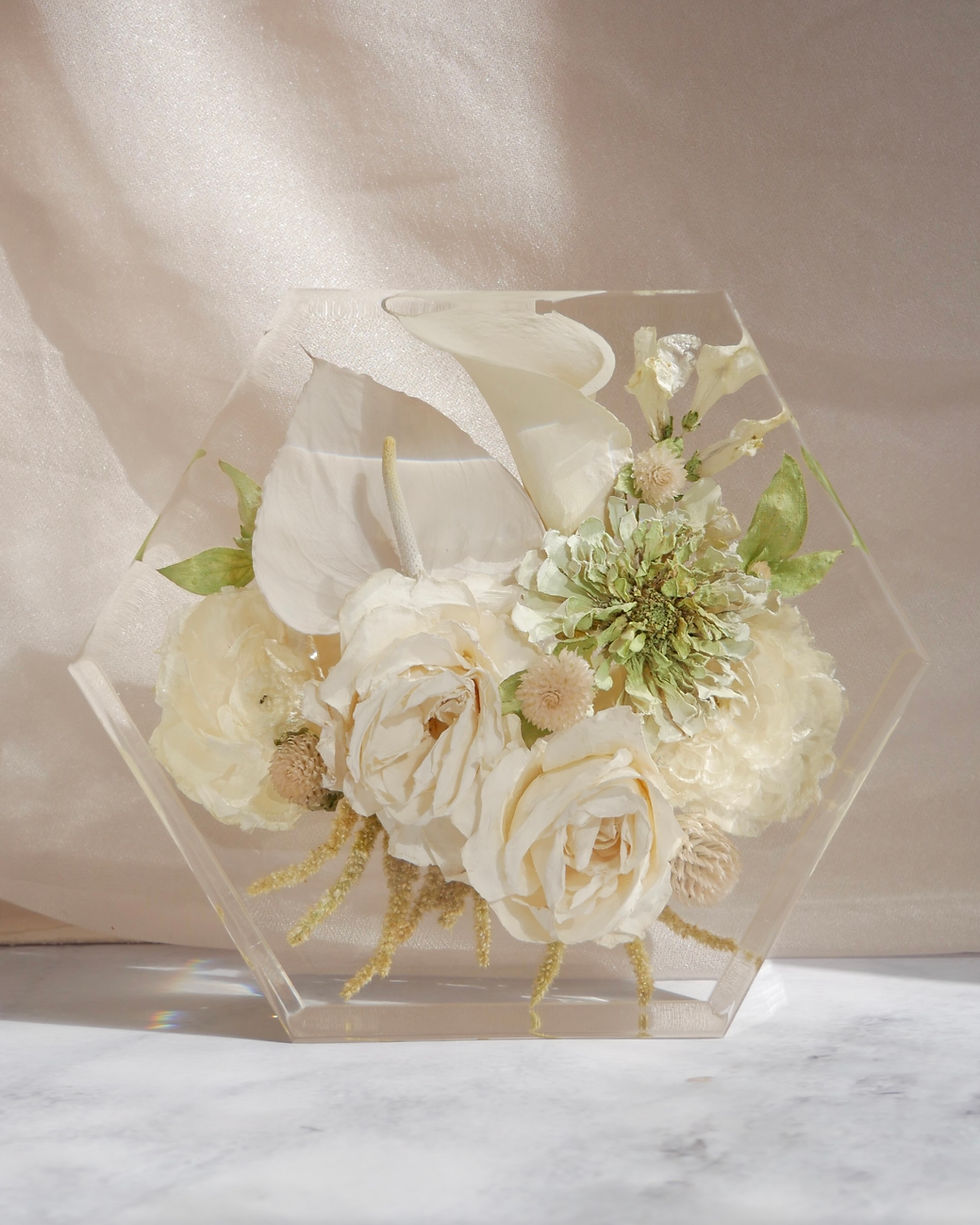
The right choice protects the memory
Special flowers deserve more than a guess, a shortcut, or a bargain that only looks good at checkout. DIY projects and low-cost artists may work for practice blooms, but irreplaceable flowers call for more care.
Hiring a professional helps reduce the risks that cause the most heartbreak: burnt petals, lost color, cloudy resin, heavy bubbles, poor layouts, and unfinished edges. It also gives you guidance before the flowers are sent, realistic expectations during the process, and a finished piece made with experience.
Before choosing a company, read reviews. Study close-up photos. Ask questions. Compare the clarity, color, and finish of the work. Trust the maker who treats your flowers like they matter, because they do.
A preserved flower keepsake should bring comfort and joy every time you see it. The right professional can help make sure the memory is protected with the care it deserves.
Bupp Woodworks and Designs


Comments